How to find your ikigai: the short answer
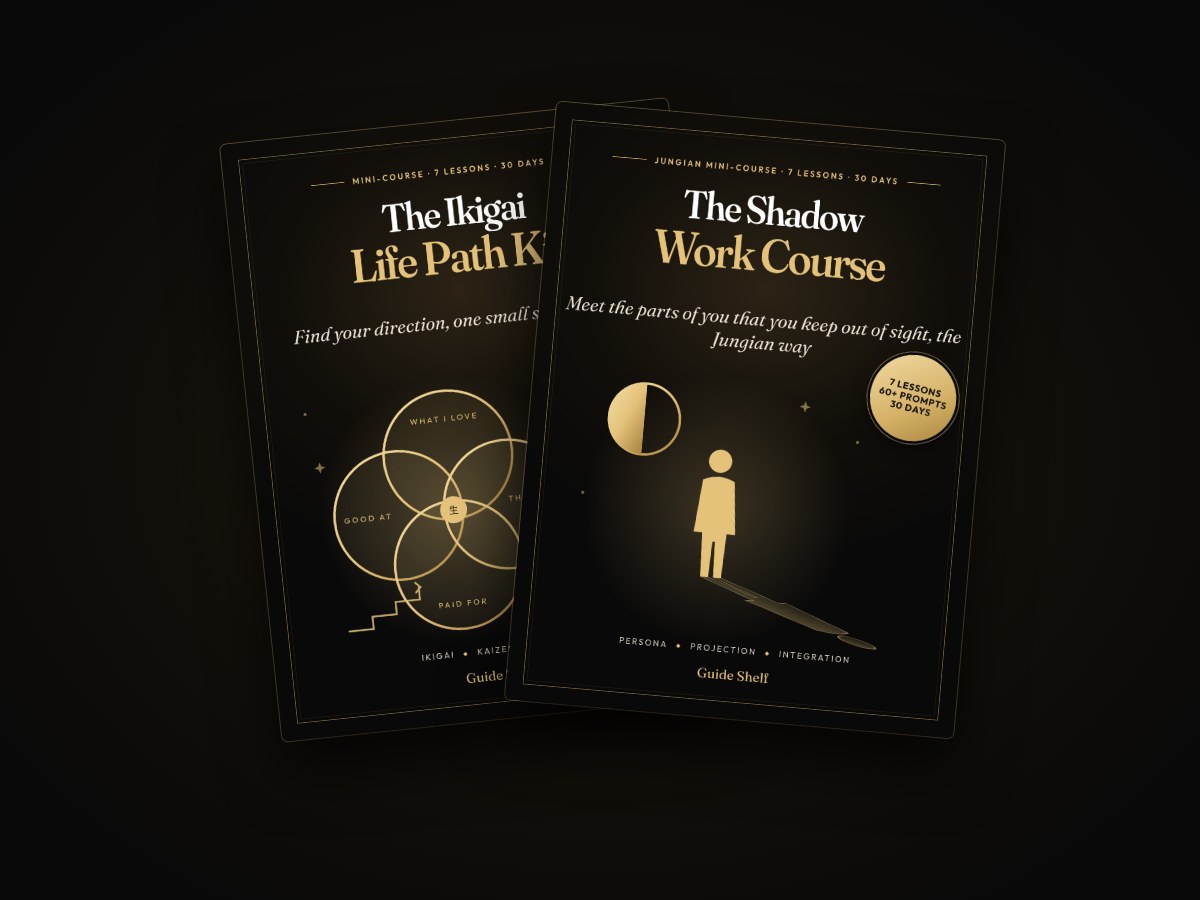
Ikigai (生き甲斐) is Japanese for something that makes life feel worth living. In Japan it can be big or small: a calling, or the morning walk you look forward to (Ken Mogi, Awakening Your Ikigai). The popular four-circle chart was created in 2014 by writer Marc Winn, building on a purpose diagram by Andrés Zuzunaga. It isn't the original Japanese meaning, but it's a useful map for choosing a direction, as long as you then test it.
1. Look like a beginner (shoshin)
Score eight areas of life from 1 to 10, now and in a year. The biggest gaps and the areas that give you energy are your first clues.
2. Fill the four circles
Five fast minutes per circle, then star the three answers that feel most true.
3. Find the overlaps
Love + good at = passion; love + needed = mission; good at + paid = profession; needed + paid = vocation. Anything in three or four circles is worth testing.
4. Notice the small ikigai
For a week, write three small moments a day that felt good or meaningful. Repeats tell you what matters.
5. Pick one direction and take a kaizen step
Write three possible paths, choose one to test for 30 days, and start with a step that takes under 10 minutes, attached to something you already do.
6. Review honestly every week (hansei)
Ten minutes each Sunday: what did I do, what worked, what didn't, and one change for next week. After 30 days, keep, adjust, or test another path.
A self-reflection workbook, not therapy, counseling, or career-placement advice. If you're struggling, call or text 988 in the U.S. Checked October 27, 2026.