Launch sale · this guide $9.99 · was $20 · save 50%
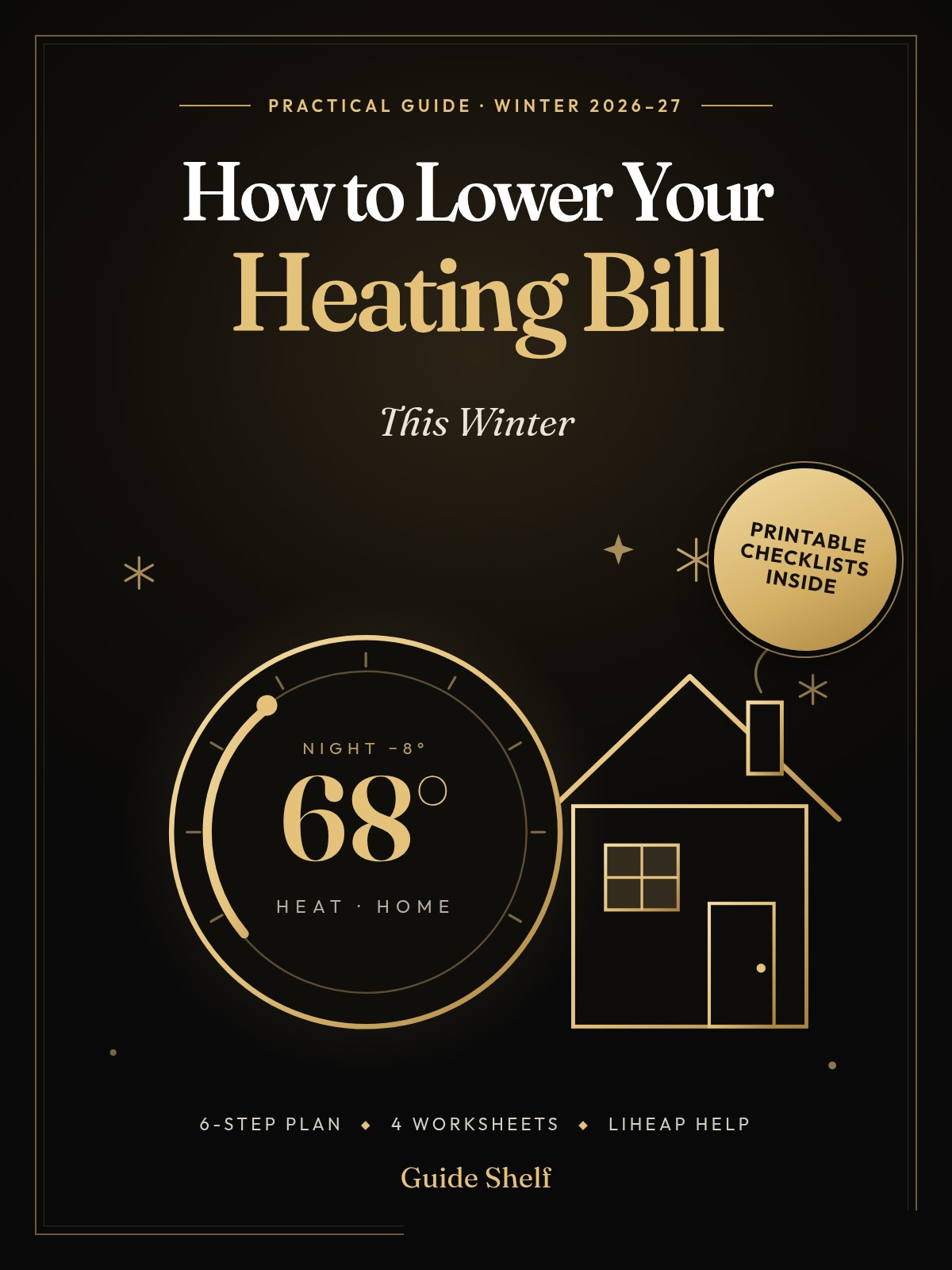
−50%Cover of the guide How to Lower Your Heating Bill This Winter, with a printable checklists badge
Home · Printable PDF · Winter 2026–27

How to Lower Your Heating Bill This Winter

Free changes first, cheap fixes next, and help when you need it. The free answer is below. The 15-page printable guide has the checklists and worksheets.

$20$9.99
Get instant access — $9.99

Instant download after checkout. Secure payment by Stripe.

  • 15-page PDF, US Letter, prints well in black and white
  • 4 fill-in worksheets, including a room-by-room draft hunt
  • Winter 2026–27 numbers, with sources

How to lower your heating bill: the short answer

Average home heating costs are projected to rise 8.7% this winter, to about $1,030. Heating oil is up most (+31.3%), then electricity (+9.0%), propane (+8.7%), and natural gas (+5.8%) (NEADA, Sept 2026). You can't change the price, but you can change how much you use, when you pay, and whether you get help.

1. Know your number

Last winter's heating bills × (1 + your fuel's projected increase) = this winter's estimate

Example: $600 last winter on electric heat × 1.09 = about $654. Compare usage (kWh, therms, gallons), not just dollars, when you check progress.

2. Set the thermostat plan

The Department of Energy suggests about 68°F when you're home and awake in winter, and turning it back 7–10°F for about 8 hours a day while you sleep or are out. That can save up to about 10% a year on heating and cooling. With a heat pump, use a thermostat designed for heat pumps before doing big setbacks.

3. Find the drafts

On a windy day, hold a lit incense stick near windows, doors, outlets, light fixtures, plumbing fixtures, and the attic hatch. If the smoke moves sideways, you found a leak. Sealing air leaks can save 10–20% on heating and cooling bills (DOE).

4. Do the cheap fixes

Weatherstrip doors and windows, put foam gaskets behind outlet plates, check that the fireplace damper closes, change the furnace filter about monthly, set the water heater to 120°F, and open south-facing curtains by day and close them at night. Air sealing plus insulation saves an average of 15% on heating and cooling costs (ENERGY STAR).

5. Even out the bill

Ask your utility about budget billing: it spreads your estimated yearly cost into equal monthly payments, with a settle-up at the end. It doesn't lower the total. Already behind? Call early and ask about a payment arrangement.

6. Get help early, and heat safely

LIHEAP helps eligible households with heating bills, crises, and repairs. Find your local office at energyhelp.us or call 1-866-674-6327. LIHEAP never charges a fee. Ask about the Weatherization Assistance Program too. Keep anything that can burn 3 feet from heaters, and never use the oven to heat your home (U.S. Fire Administration).

General education, not professional, financial, or safety-inspection advice. Projections are national averages; program rules vary by state. Facts checked October 7, 2026.
Look inside

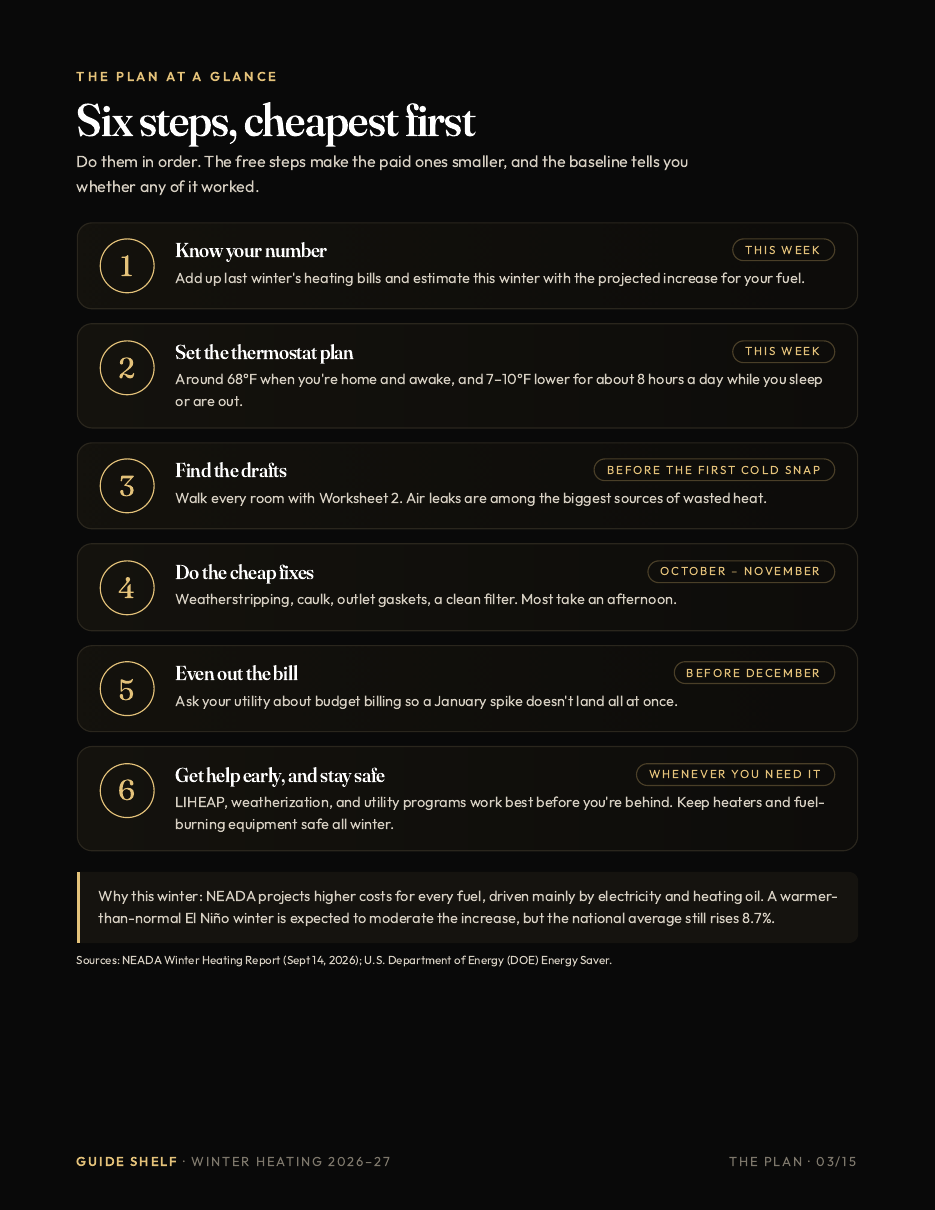
Guide page: the six-step plan to lower your heating bill
The six-step plan, cheapest first
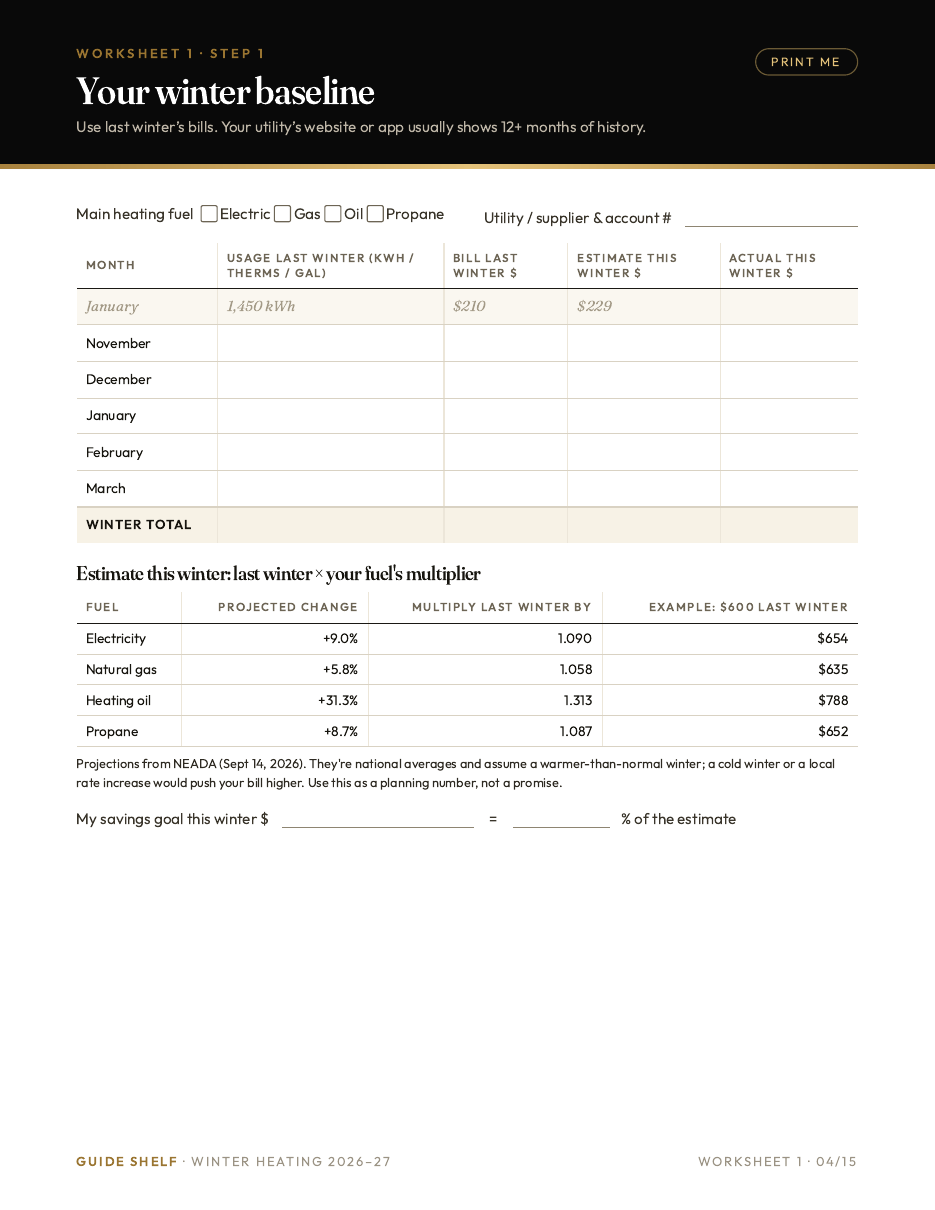
Printable worksheet: winter baseline with fuel multipliers
Worksheet 1 · Your winter baseline
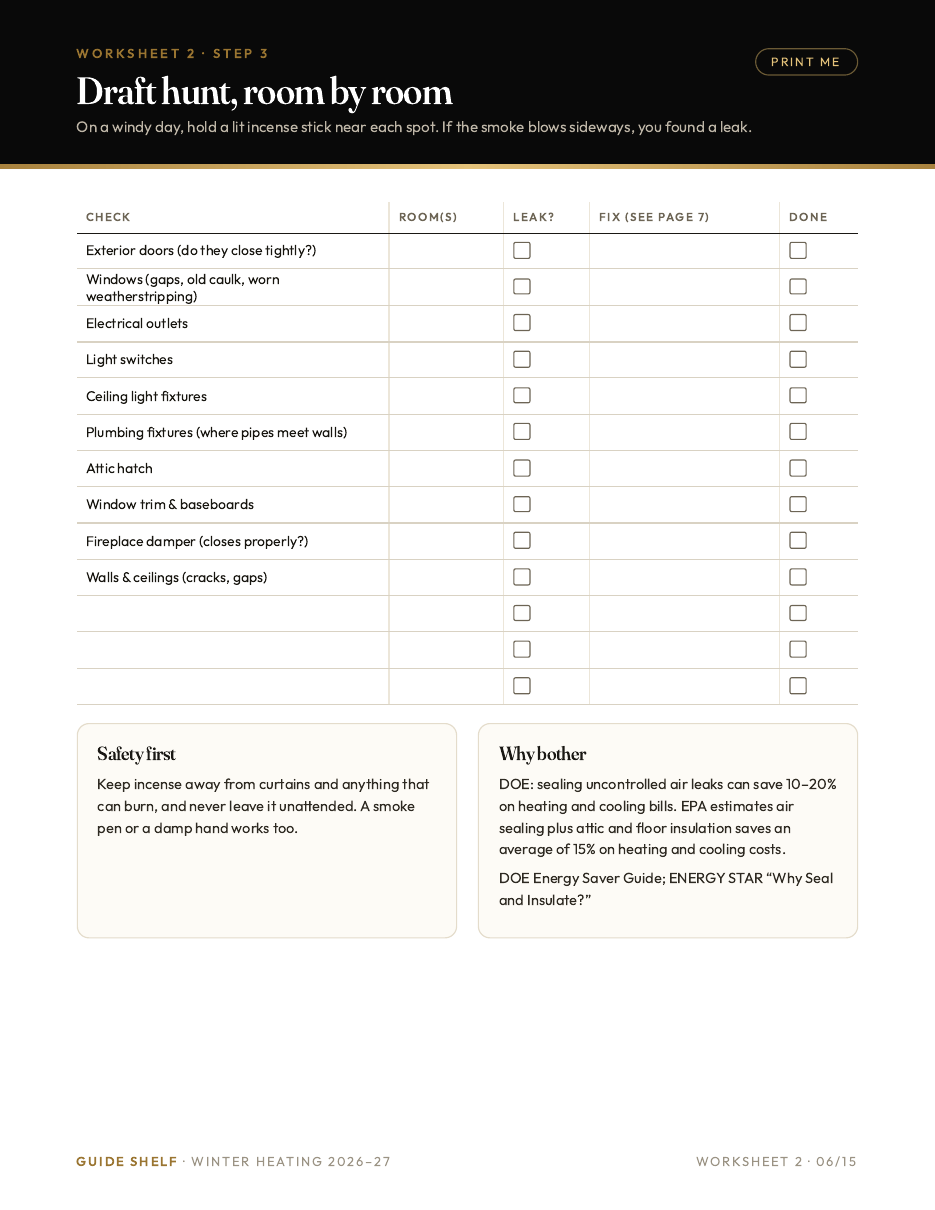
Printable worksheet: room-by-room draft hunt checklist
Worksheet 2 · Draft hunt

What's inside

  • The six-step plan: free changes first, then cheap fixes, then help
  • Worksheet 1 · Your winter baseline: last winter's bills and this winter's estimate by fuel
  • The thermostat plan: DOE settings, heat pump notes, and comfort first
  • Worksheet 2 · Draft hunt: the incense test, room by room
  • No-cost and low-cost fixes: sunlight, water heater, sealing, filters, and notes for renters
  • Worksheet 3 · Fix list: price, priority, and done dates
  • Budget billing, explained: how it works, who it fits, and questions to ask
  • Getting help: LIHEAP eligibility, how to apply, scam warnings, weatherization
  • Worksheet 4 · Help and call log: documents, dates, and who said what
  • Heating safely, monthly checklists, and a one-page summary: plus a sources page
Printable PDF guide · 15 pages
$20$9.99
Get instant access — $9.99

Pay securely with Stripe and download right away. Your receipt is emailed to you.

FAQ

How much will heating cost this winter?

NEADA projects the average U.S. home heating cost will rise 8.7% this winter, to about $1,030. By fuel: heating oil +31.3%, electricity +9.0%, propane +8.7%, natural gas +5.8%. Your bill depends on your region, fuel, and the weather.

What temperature should I set my thermostat in winter?

DOE suggests starting around 68°F to 70°F when you are home and awake, and setting it lower while you are asleep or away. Turning it back 7–10°F for 8 hours a day can save up to about 10% a year on heating and cooling.

Does budget billing save money?

No. It spreads your estimated yearly cost into equal monthly payments, so winter bills don't spike. At the end of the period you get a credit or a bill for the difference.

Who qualifies for LIHEAP?

States set the rules. Federal law lets them help households with incomes up to the greater of 150% of the poverty guidelines or 60% of state median income. Find your local office at energyhelp.us or call 1-866-674-6327.

Are space heaters safe to use?

Use them carefully. Portable heaters are involved in a small share of home heating fires but a large share of deadly ones. Keep 3 feet of space around them and turn them off when you leave the room or go to bed.

What's in the printable guide?

A 15-page PDF: a six-step plan, the thermostat plan, low-cost fixes, budget billing, LIHEAP and weatherization help, heating safety, four worksheets, monthly checklists, and a one-page summary.

Is this professional advice?

No. It is general education. For gas smells, carbon monoxide alarms, or equipment problems, contact your utility or a licensed professional right away.