How to make a holiday budget: the short answer
Start with what you can pay for in cash by mid-December, not with your gift list. Then fit the list inside that number. That order matters this year: in a September 2026 Omnisend survey, 78% of Americans said higher prices will affect their holiday spending, and 44% expect to carry holiday debt into the new year, about $408 on average (source).
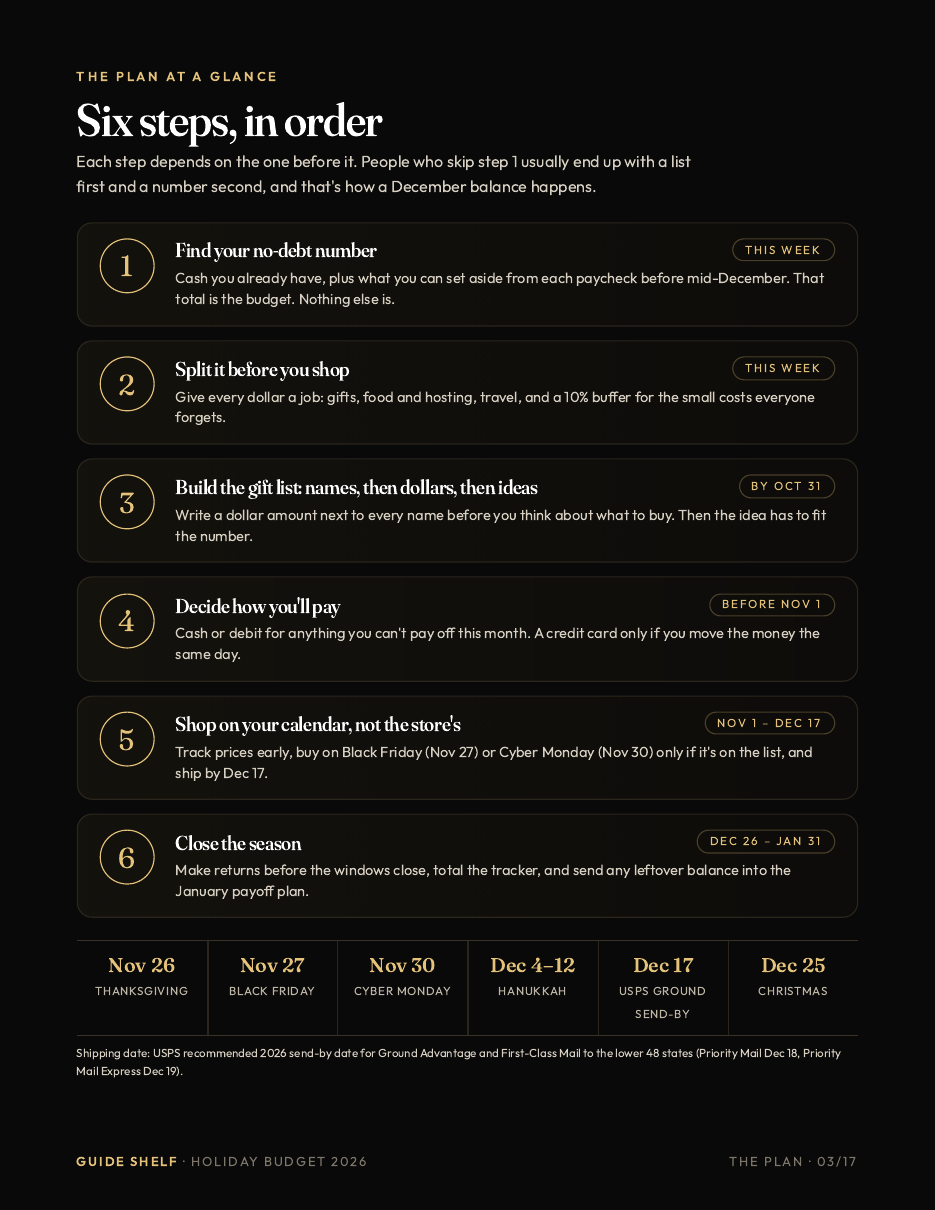
1. Find your no-debt number
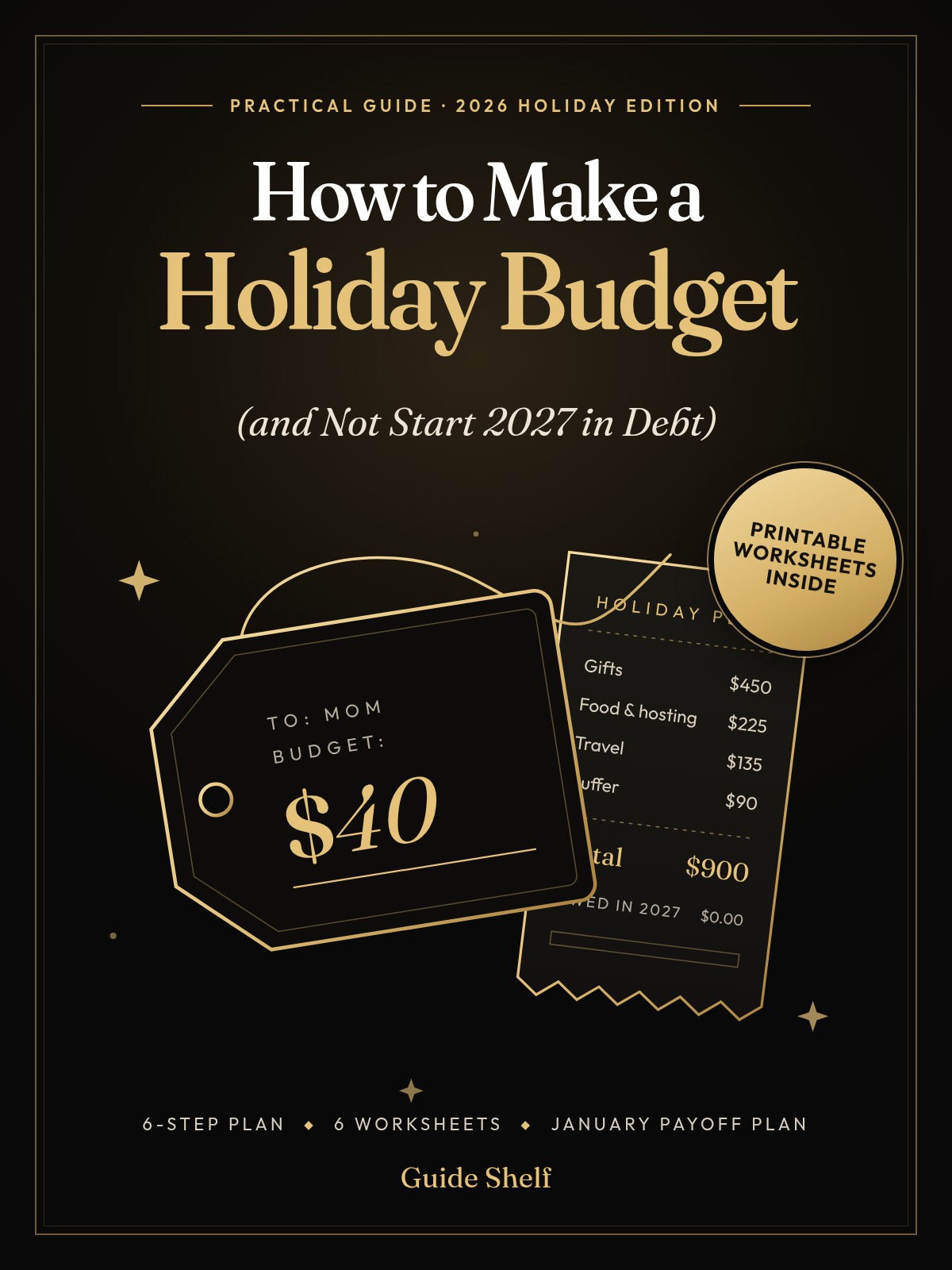
Example: $200 saved + $140 × 5 paychecks = $900. Don't count overtime you haven't worked, a bonus that isn't confirmed, or room left on a credit card.
2. Split it before you shop
A practical starting split: 50% gifts, 25% food and hosting, 15% travel, and a 10% buffer for wrapping, cards, postage, tips, and decor. On $900 that's $450, $225, $135, and $90. Not traveling? Move that share to gifts or food.
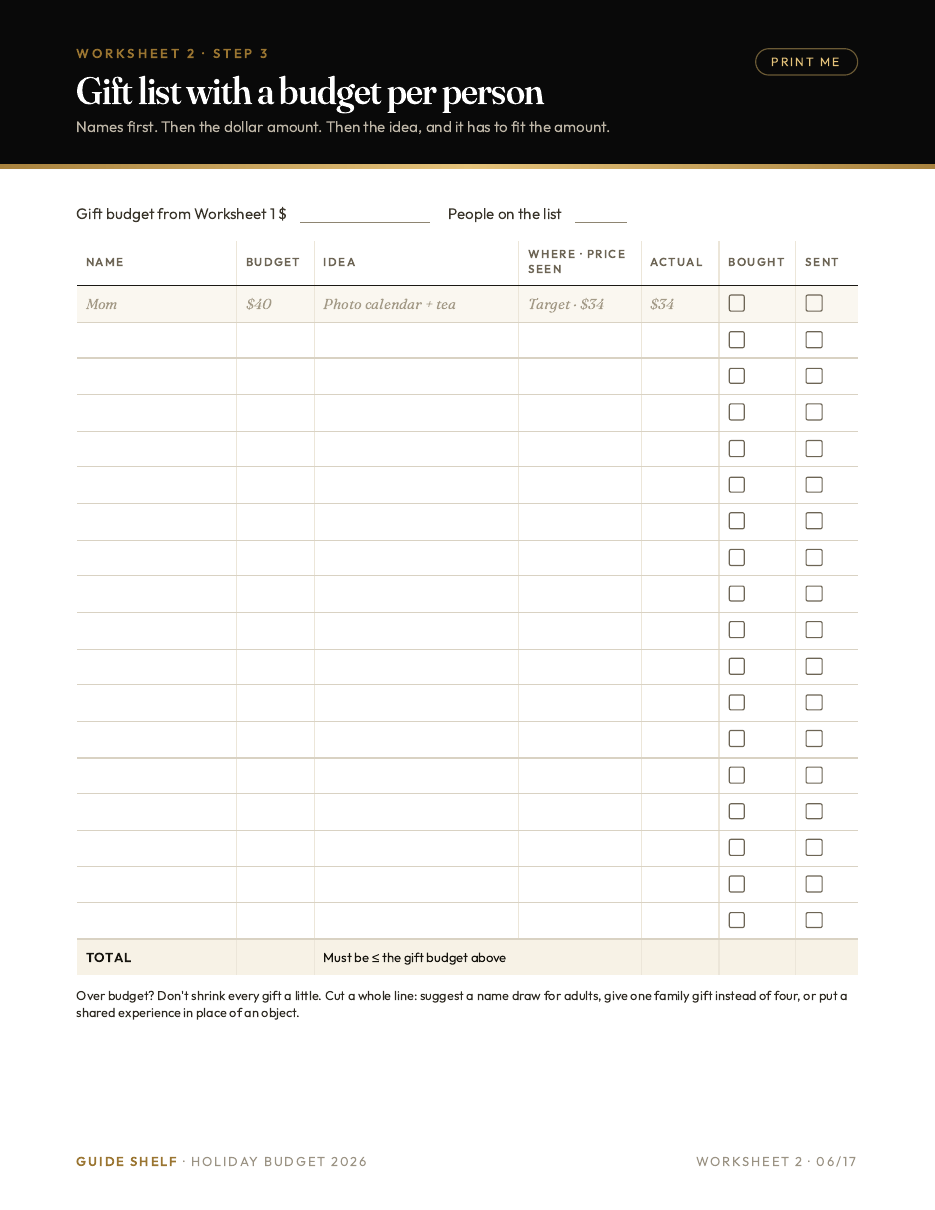
3. Names first, dollars second, gifts last
Write every name and a dollar amount before you think about ideas. Then each idea has to fit its amount. Over budget? Cut a whole line, for example with a name draw for the adults, rather than shaving a little off every gift.
4. Pay without creating new debt
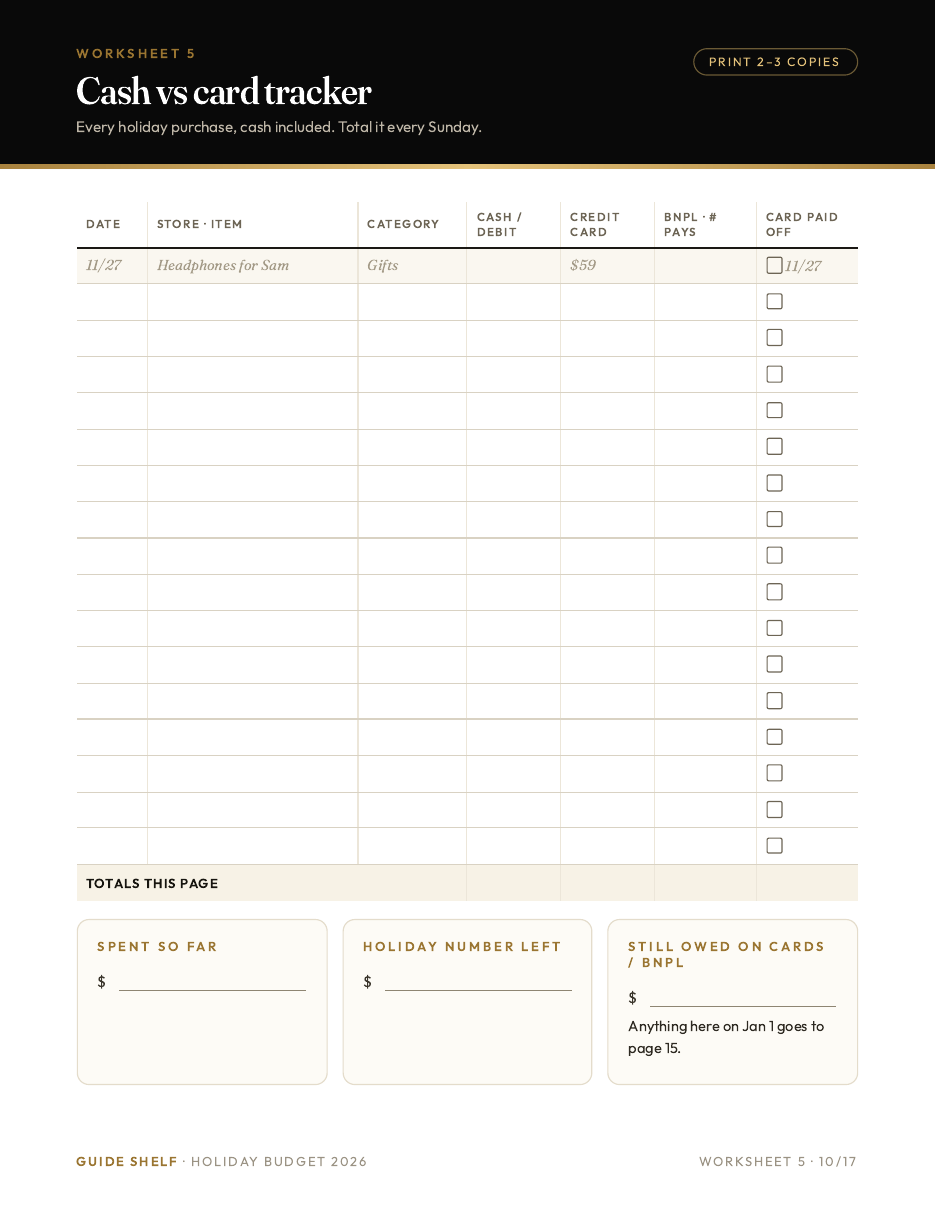
Use debit or cash for anything you can't pay off this month. If you use a credit card for the protection, move the money to it the same day. Banks charged cardholders who carry a balance an average of 22.15% APR in Q2 2026 (Federal Reserve G.19). Treat buy now, pay later as debt too, and write down every installment.
5. Shop on your calendar
Turn on Google Shopping's price tracking for big items. Target will match its own lower price for up to 14 days after you buy. Black Friday is Nov 27 and Cyber Monday is Nov 30. To skip paying for express shipping, send USPS Ground Advantage by Dec 17 for delivery in the lower 48 (USPS 2026 dates).
6. Close the season in January
Make returns before each store's deadline, total what you spent, and put any leftover balance on a payoff plan. Pay the highest APR first (avalanche) or the smallest balance first (snowball). Either way, a set monthly amount and an end date beat paying the minimum.
General budgeting education, not financial advice. Policies and dates checked October 7, 2026.