How to make a 72-hour emergency kit: the short answer
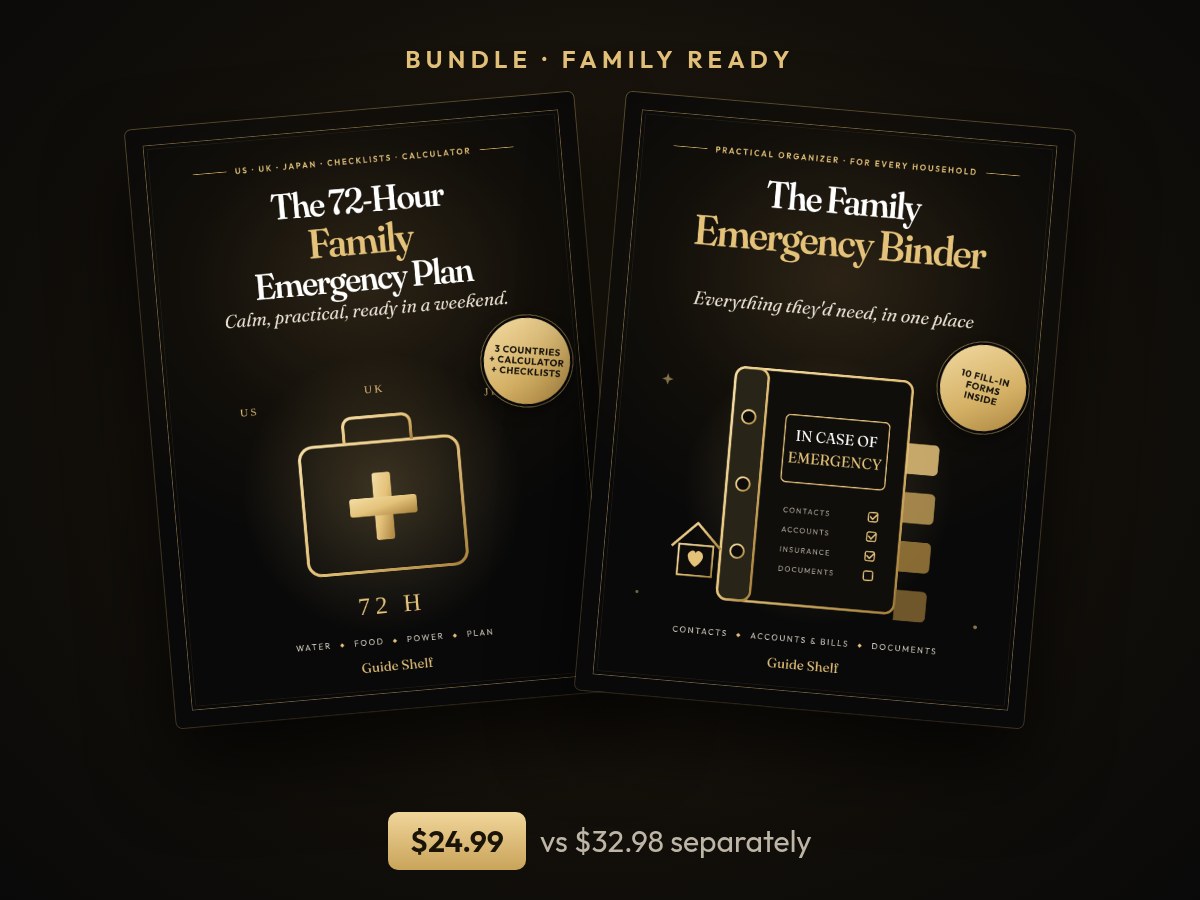
Store water and no-cook food for 3 days for everyone at home, plus light, a radio, power banks, first aid, medicines, hygiene and toilet supplies, cash and printed copies of key documents, in one place everyone knows. Water: 3 litres per person per day for drinking in the UK (Be Ready), about 3 L in Japan, and 1 gallon (≈3.8 L) per person per day for drinking and sanitation in the U.S. (Ready.gov). Check it every six months.
1. Profile your household
Every person and pet, with daily medicines, devices, formula and special diets. This drives the numbers.
2. Do the water and food math
A family of four on the UK figure: 36 L of drinking water and 36 meals.
3. Build one home kit
Torch and batteries (safer than candles), battery or wind-up radio, power banks, first aid, hygiene and portable toilet bags, blankets, can opener, whistle.
4. Plan for power and payment outages
Cash in small notes, printed IDs and insurance, offline maps, written phone numbers. UK Be Ready names power, water, phones and internet (GOV.UK). Never run generators or grills indoors.
5. Write a family comms plan
An out-of-area contact, two meeting places, alerts switched on (US Wireless Emergency Alerts, UK Emergency Alerts, Japan J-ALERT and city apps; Japan's 171 message dial).
6. Rotate every six months
Eat the oldest stock in normal meals and replace it (Japan calls it "rolling stock"). Update the plan when the family changes.
Sources: GOV.UK Be Ready (Oct 22, 2026); Ready.gov; CDC; Japan MAFF home stockpile guide; Nikkei and ANN reporting on Japan's Nov 2, 2026 appeal. Not an official government publication; general education, no guarantee of safety. Follow local authorities. Checked October 31, 2026.